Poor People or Poor Places? Evidence from China’s Poverty Alleviation Relocation
Presented at the Econometric Society NASM and AMES 2026; GLO Conference 2026 (job market session); SUFE National Doctoral Forum in Applied Economics 2026; CES 2026; CUFE International Doctoral Forum; UC Davis (ARE Development Seminar, Development Tea, Applied Micro Student Talk Series); ANU Asian Perspective Seminar
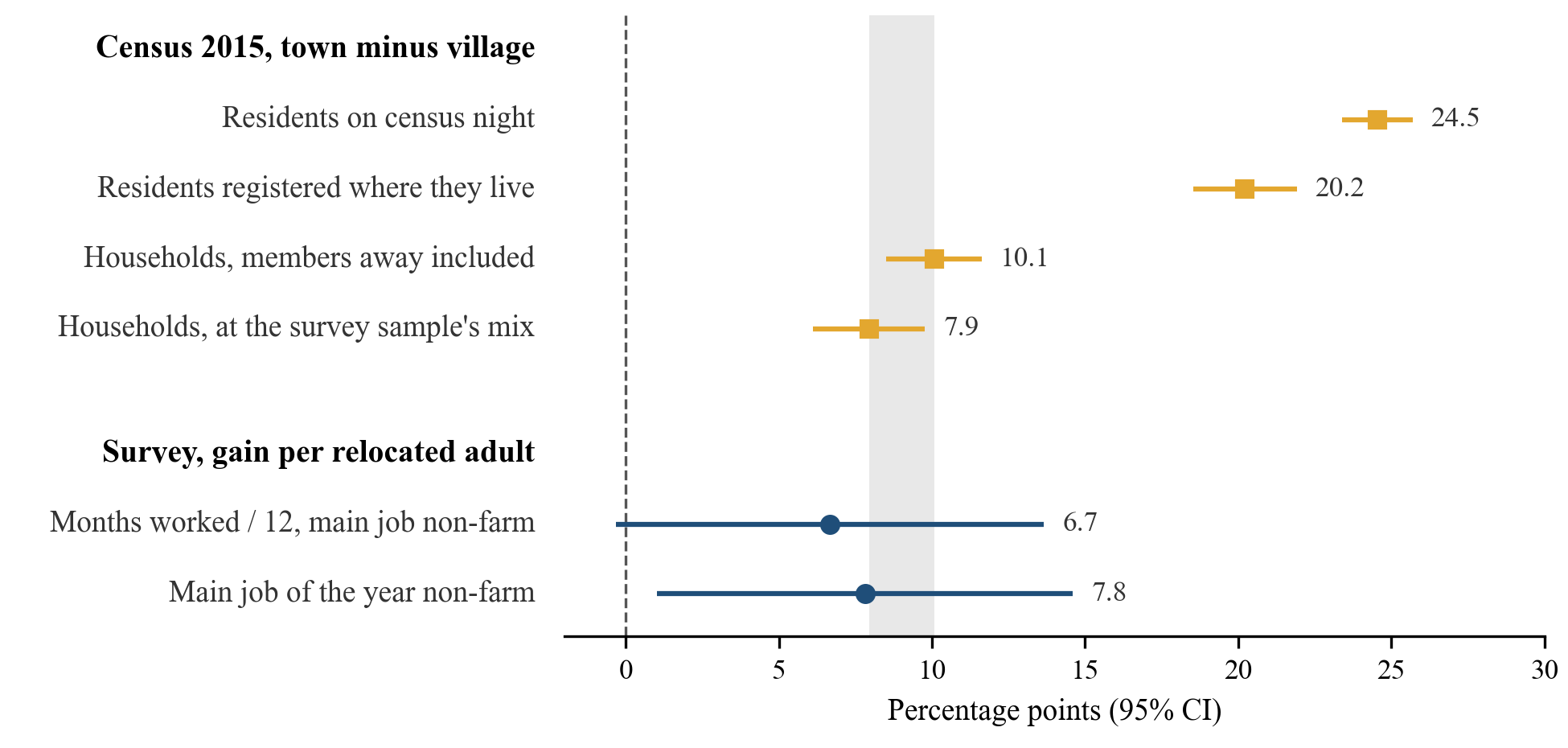
Is extreme rural poverty a property of the people or the place? I study this question using China’s Poverty Alleviation Relocation program, which moved 9.61 million residents out of remote villages between 2016 and 2020. Exploiting the staggered timing of destination housing construction, I estimate the impact of moving these communities closer to labor markets. Relocation increases adult employment by 20 percent and annual earnings by 38 percent. These gains occur among both new entrants to wage labor and existing workers. Per relocated adult, the rise in non-farm work comes to most of the gap between comparable town and village households. Heterogeneity analysis shows that earnings gains are largest for households experiencing the greatest reduction in travel time to the county seat. Combined with the value of new housing, the long-run income gains exceed the program’s costs. I conclude that geographic isolation is a binding constraint on the earning potential of the remote poor. By relaxing this spatial constraint, relocation suggests that for these households the gap with the towns is largely a property of the place.